


When you're searching for a rental share-house with one or more other people, there are plenty of exciting and fun decisions to make, like who gets which room, who scores the best car parking space, or where you'll put your furniture and beloved plant collection. But you'll need to also make some other important decisions before you even get to signing the lease.
Living in a sharehouse is almost a rite of passage for people, and it can be an exciting living situation and an easy way to reduce your expenses. But as anyone who has done the sharehouse thing knows, there can be many pitfalls. Housemates can move out abruptly and unexpectedly, leaving you to cover the rent and bills until you find a replacement. They might eat all of your precious food. They might skimp out on their share of the cleaning every single week and never, ever take the rubbish down. They could be big fans of hosting loud dance parties in the lounge room in the wee hours of the morning. They could hog the lounge and the TV remote whenever you want to watch something. Or they could cause extensive damage to the property, putting your bond at risk.
Some of these things are easy fixes, and may just require a potentially-awkward conversation. But others are much more serious and could affect you long-term. How you're able to deal with these situations all comes down to your lease agreement.
When applying for rental properties with others, you have two options for how you create your lease agreement: co-tenancy or sub-tenancy.
There are pros and cons to both, and the choice really depends on your personal situation. You will need to discuss the alternatives with any potential housemates before deciding which way to go, and ensure the landlord is happy with your decision before signing a lease.
Read through the following to see which works best for you and your housemates:
Co-tenancy
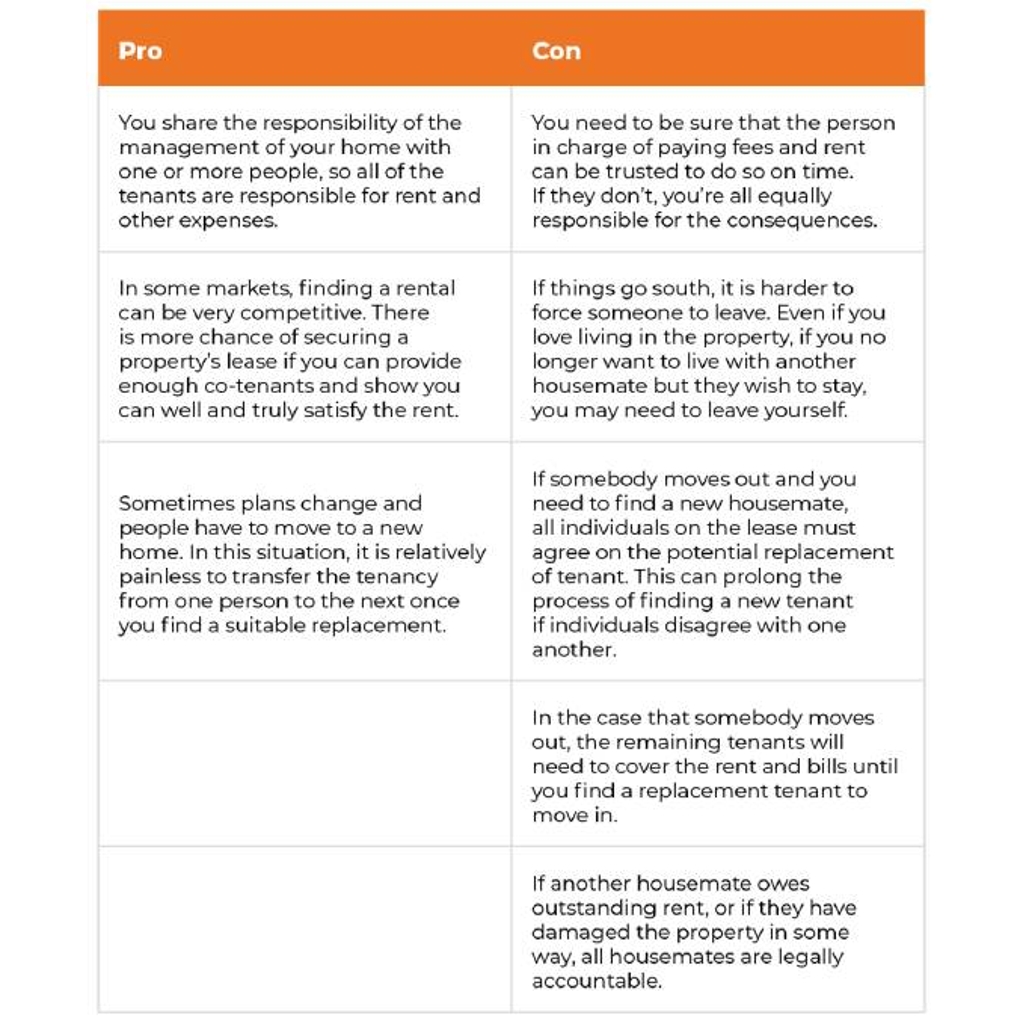
A co-tenancy is when two or more people are all named as tenants on your lease or tenants agreement, and they are then known as co-tenants.
In these cases, all housemates can be held responsible for the actions of one, and vice versa.
Sub-tenancy
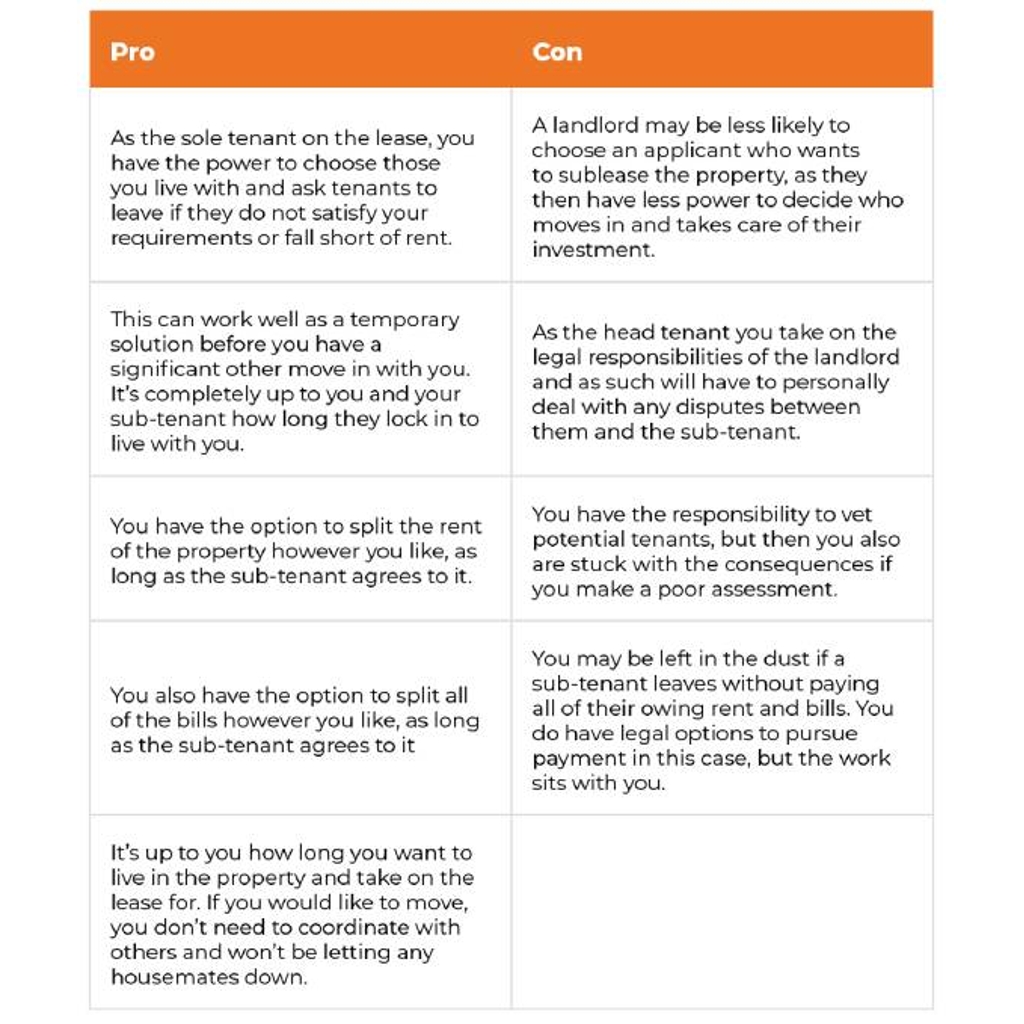
In the case of a sub-tenancy, one person is the sole lease holder, and they then sublease one or more rooms to other tenants, but those other tenants are not named on the lease agreement. As the head tenant, you effectively take on the responsibility of landlord to your sub-tenants. It does mean you have more power over things, but it also comes with far more responsibility, and essentially, you are responsible for the whole property.
Don't forget - to become a head tenant, you must obtain written permission from the property owner before you can legally sub-let rooms to others.