
Investors are increasingly targeting the fast-growing co-living real estate sector, lured by the attraction of higher rental income.

What is co-living? As the name suggests, it is multiple people living in the same building - anything from a suburban home to a city high-rise.
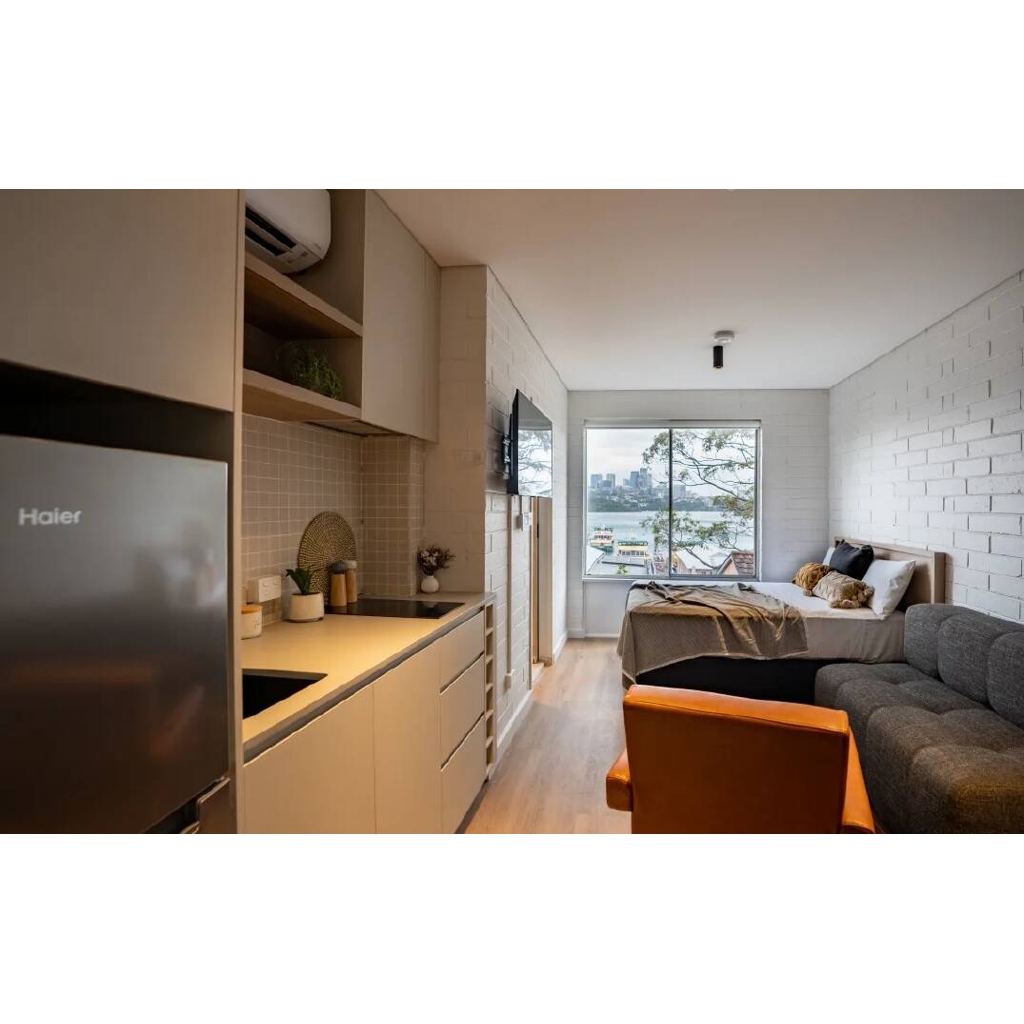
Each tenant leases their own self-contained room or studio while sharing common areas with other residents.
There are multiple variations on this theme.
At the higher end, some co-living brands with serious financial backing such as UKO or lyf, part of The Ascott Group, have community managers that run everything from wine evenings to workshops.
Smaller investor opportunities
Mum and dad investors can get involved by purchasing specially designed co-living houses that look like any other but feature fully self-contained bedrooms, each of which is leased to different tenants, boosting rental returns.
Akhlinder Dani from CoLiving Homes says demand is growing and investors can get rental yields of eight per cent or more from a three-bedroom co-living house.
"It's a standard residential house but each of the rooms will have its own ensuite, its own lockable pantry and lockable laundry but the living area and the kitchen area will be shared," he says.
Dani is based Victoria where he says a three-bedroom house in the outer suburbs or regional areas valued at $700,000 would typically lease for $500 to $550 a week.

"Whereas the co-living house can be rented out at $300 to $350 per week per room, so basically $900 to $1050 a week - almost doubling the returns," he says.
"Of course, the outgoings will be higher, but still, it's way more profitable."
Big deals
In higher-density areas, such as inner-Sydney, co-living is all about building up and packing as many co-living apartments as possible onto a single site.
There's hot competition for sites, and vendors are boosting their sale prices by up to 50 per cent by getting council approval for co-living developments before putting their property on the market, says Anthony Pirrottina from Knight Frank.
"Co-living development sites are highly sought after by developers as demand for completed product is high and returns are strong," says Pirrottina.
This month he sold a 544 square metre co-living site in Leichhardt, Sydney, for $3.18 million - representing an inner-west record valuation of $138,000 for each of the 23 approved studio apartments with balconies.
"The estimated total rental for the property is up to $811,200 per annum gross upon completion with rents for each apartment expected to $600 to $650 per week," says his colleague James Masselos.
Pirrottina says new co-living apartments are small but well-designed.
"They're generally between 20 and 30 square metres, depending on the location and design. The fit-outs are good and there's common spaces, lounge areas, gardens."
In many respects, co-living developments are an updated and much improved version of a boarding house, says Pirrottina.
"They are built for purpose plus they're newer and nicer and they're designed to be lived in long term. Whereas a boarding house could be pretty cheap and nasty."