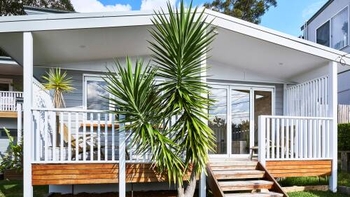

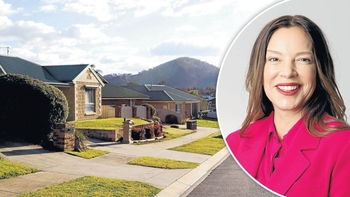
Homeowners around the country are being door knocked by developers eager to lock up land near metropolitan transport hubs targeted by government for apartment rezoning.

For some residents this is their worst nightmare - they like their suburb the way it is - but for others it represents a never-to-be-repeated financial windfall with the potential to double their property's market value.
Working with the neighbours
Experts say the key to homeowners maximising the financial opportunity presented by rezoning is partnering with neighbours to create aggregations of at least 1000 square metres - preferably much larger.
But that is often easier said than done, says Mark Litwin, Head of Investment Sales at Knight Frank, North Sydney.
"Collective sales have to consider the human element first, and then the commercial element," says Litwin.
"At the end of the day you can't force someone's hand on a signature, so knowing yourself and your neighbour is paramount."
Litwin also advises homeowners to engage early in the process.
"But don't feel pressured, get informed before you make decisions.
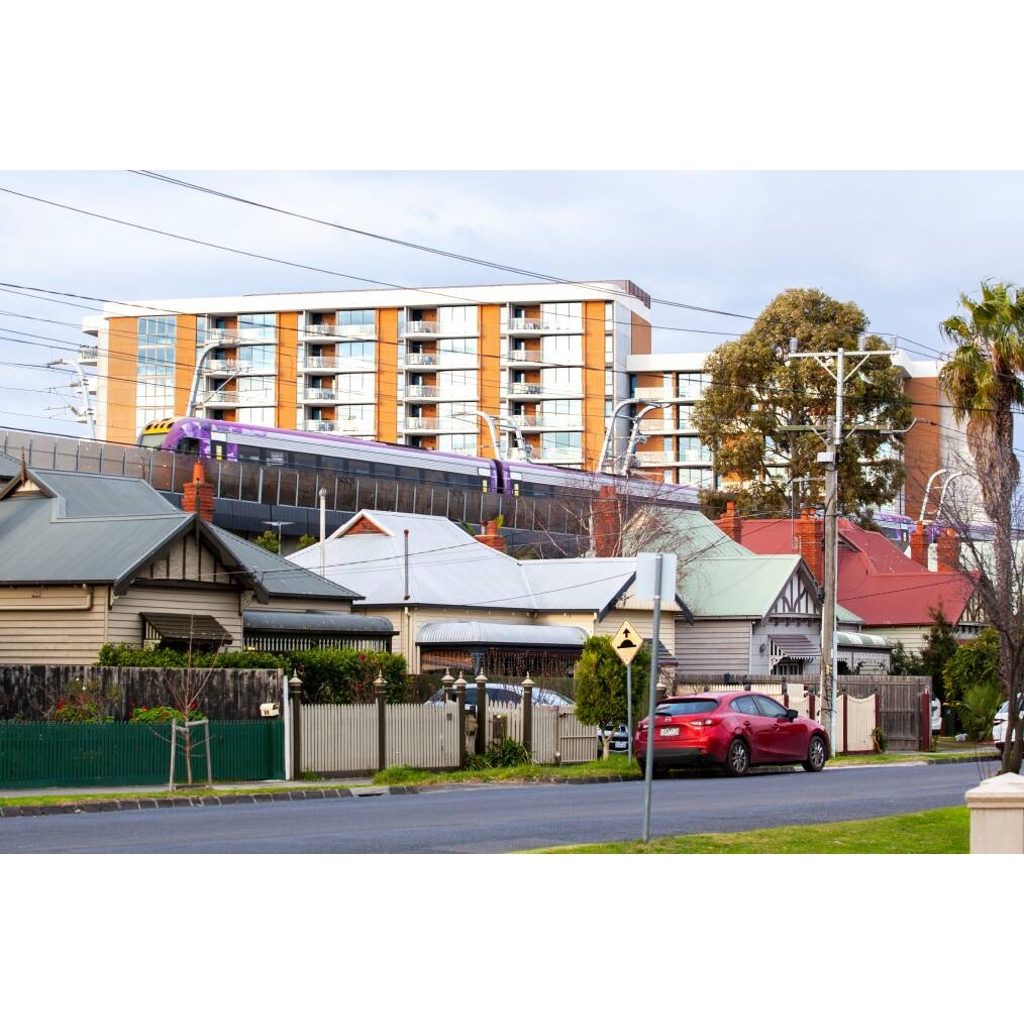
"The volume of the financial upside will vary, it's really about what the new development potential will be."
NSW is leading the national density push with the state government announcing that apartment buildings of up to six-storeys within 400 metres of 18 train stations across Sydney, Central Coast, Newcastle and Wollongong will be permitted from May 13.
Another 19 stations will be rezoned over the next three to 18 months, followed by numerous other transport hubs and town centres.
How do the numbers add up
Peter Clemesha, co-Founder and Executive Director of Avenor, a real estate investment and development business, says these changes present a major opportunity for both developers and property owners but it all gets down to yield.
"You need a site of a minimum 1000 to 1500 square metres so the best thing is for neighbours to work together," he says.
It's not unusual for homeowners who take this collaborative approach - in the right location - to double the market value of their property, while premiums of 50 per cent or more are common according to Mr Clemesha.
"As a developer we'd look at an envelope design of what we could get on the site, the current value of housing, and do a feasibility which would give us a 20 per cent return which you need to finance the development and then we'd go and knock on doors."
Sites are secured by offering adjoining neighbours "an amount which makes it worthwhile" typically via a Call Option for the developer to purchase dependent on rezoning or development approval.
As an incentive to sign, these options generally come with a non-refundable deposit for one per cent of the proposed sale price the homeowner keeps if the deal falls over.
Litwin from Knight Frank says an exchanged sales contract is the least risky approach.
"Ultimately, this is a balance for everyone around the price they want, and what risks they are prepared to take."
Developers acting
For homeowners near stations in suburbs such as Roseville on Sydney's north shore, it is a question they consider every day.
Roseville resident Alex, who did not want his surname used, says he has received five separate developer approaches since December and may combine with neighbours to run an expressions of interest campaign through a real estate agent.
Alex says he doesn't have much choice.
"We're probably going to have six-storeys directly behind us overlooking our backyard so our time frame for downsizing is being accelerated by the whole process."
That said, it is a process is likely to take many years.