
Property prices in regional Australia have come out on top over their city counterparts according to a new report.
Less suburbs in regional Australia have suffered price drops than capital cities during the past 12 months, according to the latest snapshot of home prices has come through the CoreLogic Mapping the Market Report, which looks at housing markets across the country.
However those areas in commutable distances have suffered the greatest price drops.

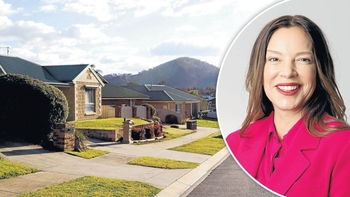
"Regional Australia has remained more resilient to falling values so far, with 75.4 per cent of the 1,718 house and unit suburbs analysed recording a quarterly decline in values, compared to 83.8 per cent for the capitals," said CoreLogic Economist Kaytlin Ezzy.
"The contrast is more apparent at the annual level, with 59.8 per cent of capital city markets falling below the levels recorded this time last year, while 62.3 per cent of regional markets ended 2022 up, compared to 2021."
Despite big property price hikes across regional Australia over the last two years, homes outside the capital cities were still more affordable and this may have protected it from bigger price drops.
"It's likely regional Australia's relative affordability has helped protect some markets from the worst of the current downturn," Ms Ezzy said.
"Despite solid growth over the COVID period, the combined regional median house value ($597,584) is still more than $260,000 cheaper than the average capital city house ($859,684).
"At a time when rising interest rates and high inflation has stretched many potential buyers' budgets, the relative affordability that many regional markets still offer has helped insulate these market."
Regional cities within commuting distance however have fared the worst, with every suburb in the NSW region of Illawarra covering Wollongong and Ballarat in Victoria seeing prices drop in the past three months.
"Commutable lifestyle markets like Ballarat and Illawarra benefited greatly from the move to remote work over the COVID period, with house values rising 26.9 per cent and 44 per cent, respectively, between March 2020 and April 2022," said Ms Ezzy.

"While these markets may have experienced a small drop in demand as some workers transition back to the office, it's more likely the broad-based declines seen over these areas are due to rising interest rates, worsening affordability constraints and lower consumer sentiment."
And a rise in prices in these areas is not expected soon.
"Given that more expensive markets are typically more volatile and sensitive to rising interest rates, it's unlikely we'll see any broad-based lift in values across these areas until the cash rate reaches its peak," Ms Ezzy said.
The report looked at both house and apartments prices with apartments in Newcastle and Lake Macquarie declining less than houses.
Apartment prices in the suburbs of Newcastle, Warners Bay, Morriset and Cardiff all saw gains in both the last three months and last 12 months.
In the suburb of Newcastle, for example, unit prices rose 3.2 per cent over 2022 with the median price now sitting at $884,559.
Higher house prices in Newcastle means units are now looking a good option.
"With interest rate rises reducing borrowing capacity, many buyers are turning towards the unit market as a more affordable alternative," said Ms Ezzy.
"At roughly $650,000 Newcastle's relatively affordable median unit value has helped insulate units from the larger declines seen across Newcastle's more expensive house market.
"A similar pattern can be seen across both capital city and regional markets, with house and unit values falling 3.7 per cent and 2.2 per cent across the capitals, and 3.4 per cent and 2.3 per cent across the combined regional, respectively."