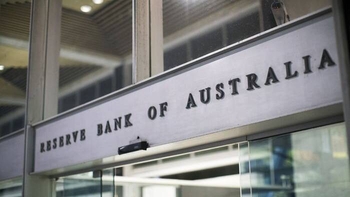


The Reserve Bank of Australia has raised rates for the sixth consecutive month, opting to increase the official interest rate by0.25 per cent at its October meeting and flagged that further increases are likely in the months ahead.
The official cash rate now sits at 2.6 per cent.
The increase is less than the 0.5 per cent rise that three of the big four banks expected. Only Commbank predicted the 0.25 per cent rise.

"At its meeting today, the Board decided to increase the cash rate target by 25 basis points to 2.60 per cent," Mr Lowe said in a statement.
"The Board is committed to returning inflation to the 2-3 per cent range over time. Today's increase in interest rates will help achieve this goal and further increases are likely to be required over the period ahead."
He acknowledged the steeper hikes that have come in recent months and explained how the 0.25 per cent rate was decided.
"The cash rate has been increased substantially in a short period of time. Reflecting this, the Board decided to increase the cash rate by 25 basis points this month as it assesses the outlook for inflation and economic growth in Australia."
He noted that inflation was still too high in Australia and therefore further rate rises could be expected.
"As is the case in most countries, inflation in Australia is too high. Global factors explain much of this high inflation, but strong domestic demand relative to the ability of the economy to meet that demand is also playing a role.
"A further increase in inflation is expected over the months ahead, before inflation then declines back towards the 2-3 per cent range.
"Today's further increase in interest rates will help achieve a more sustainable balance of demand and supply in the Australian economy. This is necessary to bring inflation back down. The Board expects to increase interest rates further over the period ahead."
The RBA started hiking rates from there historic low of 0.1 per cent at its May meeting when it opted for a 0.25 per cent rise.
It then raised rates by 0.5 per cent in June, July, August and September.
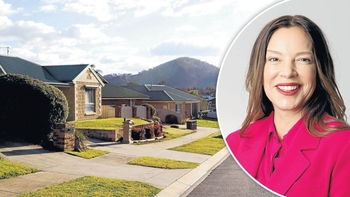
Regional homeowners with a mortgage are set to have to cope with bigger payments to pay off their homes following the 0.25 per cent October increase according to analysis from comparison website Canstar. .
It will be an extra $64 a month for those with a loan on a home worth $515,80 - which is the median house price for regional Australia overall.
That is based on someone putting down a 20 per cent deposit and borrowing 80 of the value of the home, or $412,646.
Monthly repayments would now sit at $2,338.
The latest increase sees six months of rising interest rates that homeowners have had to endure.
If such rate rises increase that could lead to real pain as Christmas - and its extra costs - come around according to Canstar's finance expert Steve Mickenbecker.
"It won't be a holly jolly Christmas for mortgage holders with rate rises likely to continue for what could be eight straight months," said Mr Mickenbecker.
"The end of the year is likely to be marred by higher costs for almost everything, including that longed-for Christmas holiday, fuel to visit family and friends, and the price to pay for the usual festive feast.
"Even more challenging for some will be having to pull money out of the Christmas budget for higher loan repayments.
However the rise in rates is not expected to lead to any distress selling, where people unable to keep up with mortgage payments are forced to sell, according to one leading economist.

Ray White chief economist Nerida Conisbee said that despite six month of rate increases for Australian mortgage holders, she did not foresee distress selling.
And she put this down to how accommodating banks are today with borrowers.
"The last time we saw a really sharp decline in crime being greater than 15 per cent was Sydney post the global financial crisis and the challenge there was not only a lot of people losing their jobs, but we also had a banking system that was really strapped for cash and just really couldn't accommodate distress so readily," she said.
"Right now, we're not in that situation.
"Here in Australia, we are in a in a much better situation that banks can help and they don't want to be stuck with bad debts.
"It's in their best interest to try and get people through this time period."