
Apartments and units have always been cheaper than houses in most parts of Australia but never - on a national level - has the difference been so vast.

The price gap has become a chasm, and is largest in the major capital city markets where it has tripled in just four years.
Median capital city house prices are now 45 per cent greater than apartments, up from a 15 per cent average in the decade between 2010 and 2020, according to property data provider CoreLogic.
But lately, as houses have become unaffordable for many, demand for apartments is rising, driving marginally stronger price rises than detached housing.
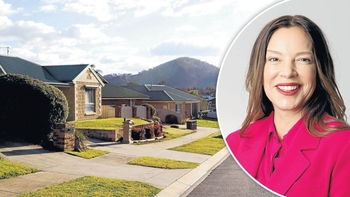
Eliza Owen, CoreLogic's Head of Residential Research, says median unit prices increased 1.8 per cent compared with 1.7 per cent for detached houses in the three months to the end of April.
"I think we are in a period for the capital city markets where units are outpacing houses because of deterioration in savings and affordability," Ms Owen says.
"It's inevitable there will be some pivot back to units, I just don't think it's going back to the pre-COVID levels we were observing."
Two-speed property economy
She says the insatiable appetite among Australians to own their own piece of land has created a two-speed property economy.
"To put it very broadly, detached house values will generally always have greater upswing than unit values," says Ms Owen.

Demand for houses was supercharged by COVID and exacerbated by a shortage of supply.
In 2021 national house prices rose 27.6 per cent, almost twice the 14.7 per cent increase in unit values.
"I think it's a lasting structural change because housing and land is only going to become more precious in our capital cities," Owens says.
"There's not as much pressure in the regions where there's more land available and units attract a premium because they're often in desirable waterfront locations."
Sydney has the biggest gap at 68 per cent, followed by Canberra, 64 per cent, Darwin, 59 per cent, Wollongong, 59 per cent, Adelaide, 56 per cent, Melbourne, 54 per cent, Brisbane, 53 per cent, Perth 48 per cent, and Newcastle, 32 per cent.
By far the smallest differential between houses and apartments prices is in regional Australia at 15 per cent.
Cheaper apartments are a good thing
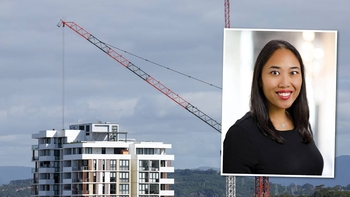
Neridah Conisbee, Chief Economist at Ray White, Australia's largest real estate network, says cheaper apartments are a good thing and supports the shift to high density living.
"We do need that differential to occur because the best way to achieve affordability is higher density, we can build more apartments more cheaply because of the cost of land," she says.

But Conisbee argues that the national unit median does not reflect the sector's evolution, particularly for larger properties and the luxury apartment segment, characterised by high prices and significant capital growth.
"We're starting to now see apartments as a long-term living solution - they are no longer just the starter package," says Conisbee.
"We're seeing families living in them longer, we're seeing higher demand for bigger apartments and we're also seeing strong demand for luxury apartments.
Demand for luxury apartments
"When we look long-term at how much luxury apartments have increased in value, they have increased a lot more than apartments priced at the median.
"There's definitely a demand for those really, really expensive apartments, primarily from downsizers."
Owen from CoreLogic says the house/apartment price differential is something that should be monitored from a social equity perspective.
"The fact is that detached house owners will probably gain more from their housing over time than those who can only buy into the unit sector," she says.
"So, there's an issue of inequality. It's no longer about the haves and have not of real estate, it's about the have and have nots of land."