
First-home buyers have been in the spotlight as both major political parties have announced their policies that they say will get people into their own homes sooner.
So what are the policies?
Both major parties delivered their housing policies at their campaign launches on the weekend.
Labor and the Coalition both had first-home buyers as their target, as young voters are faced with housing shortages and rising prices and are struggling to get on the first rung of the property-owning ladder.

First-home buyers would be able to purchase a home with just a five per cent deposit, with the government guaranteeing the remaining amount that is currently needed for lenders' mortgage insurance under Labor.
This is, to an extent, an existing policy for first-home buyers under the current Labor government.
Under the First Home Buyers Guarantee, the government effectively acts as a guarantor on the loan, doing away with the need for Lender's Mortgage Insurance. This is currently capped, allowing only single first-home buyers with a yearly income of $125,000 and $200,000 a year for couples. It is also currently capped at 50,000 people each year.
The announcement on the weekend effectively means this scheme will have no income limits and no capped numbers of places available.
The only restriction would be on the price of the home, which would be capped relative to the average for each city or region.
They've also committed $10 billion to build 100,000 homes exclusively for first-home buyers, as part of their broader 1.2 million new homes target,
The Coalition meanwhile also targeted first-home buyers.

Under their policies, first-home buyers of newly built homes would be able to deduct mortgage interest on loans up to $650,000 from their income tax. This is limited to five years.
There is no limit to the price of the property or the size of the mortgage, however the scheme will be means tested with it being available for singles with an income up to $175,000 and $250,000 for couples.
On the supply side, the Coalition has also proposed a $5 billion infrastructure fund to unlock land and enable construction of 500,000 new homes.
What an expert says:
The policies of both parties have been analysed by those in the property industry who have had their say.
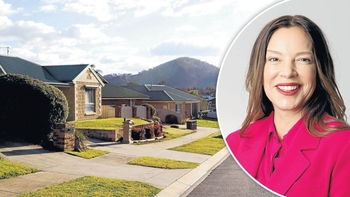
Ray White Group chief economist Nerida Conisbee said that the two parties have targeted different areas of difficulty for first-home buyers.
"Labor's approach tackles the initial deposit hurdle," said Ms Conisbee.
"Currently, about 50,000 Australians annually access an income-capped version of this scheme, but the government expects this to increase to around 80,000 under the expanded program.
"The scheme removes the need for lenders' mortgage insurance, potentially saving first-home buyers tens of thousands of dollars upfront. This would apply to both established and new homes, with price caps still in place."
The ongoing costs of buying a home is the approach that has been announced by the Coalition.
"The Coalition's plan instead focuses on reducing ongoing mortgage costs through tax deductions, but only for newly built properties," she said.
"Their strategy aims to incentivise new construction by providing substantial tax benefits to those willing to purchase new homes."
Supply and demand
She said that when it comes to the fundamental issue in housing affordability is the balance between supply and demand, and each party's policy addresses this differently.
"Labor's deposit guarantee scheme will certainly be popular but risks further inflating property prices by increasing buyer capacity without adequately addressing supply constraints," she said.
"The Productivity Commission's research on first home buyer incentives consistently shows that measures increasing purchasing power often lead to price increases in the targeted market segments.
The Coalition has outlined a different approach.
"The Coalition's approach more directly targets supply by limiting benefits to newly constructed homes and focusing on infrastructure investment to unlock development opportunities," she said.
"This addresses one of the biggest challenges in housing development - the high infrastructure charges and regulatory barriers associated with releasing new residential land."