Housing affordability is slipping further in Newcastle and Lake Macquarie, with a report revealing the percentage of household income required to service a new mortgage is higher than in all capital cities except Sydney.
A new mortgage for a median priced dwelling takes up 58.3 per cent of a household's income in the region, according to the latest ANZ-CoreLogic Housing Affordability report.

The data is based on a 20 per cent deposit on the current average variable discounted mortgage rate.
Modelling supplied by CoreLogic and ANZ suggests the gross median household income in Newcastle and Lake Macquarie is $98,000.
By comparison, Sydney homeowners spend 62.1 per cent of household income to service a new loan, 56.2 per cent in Adelaide, 51.7 per cent in Brisbane, 46.4 per cent in Perth, 46 per cent in Hobart, 44.3 per cent in Melbourne, 38.6 per cent in Canberra and 24.5 per cent in Darwin.
"The Newcastle and Lake Macquarie region is a fairly expensive market as one that has received a lot of spillover demand from our most expensive capital city," CoreLogic's head of research Eliza Owen said.

"It's a combination of this inherent high price point of the region alongside a sharp rise in interest rates that has brought the portion of income required to service a loan from 33 per cent to 58 per cent in the space of five years.
"It has been a steep increase everywhere but the challenge for the region is that values across this market have been so resilient, even in the face of interest rate rises."
Australia's latest gross median household income level is around $101,000 per year at September 2024, up from $98,500 a year earlier.
This equates to a 2.8 per cent rise over the past year, which is well below the 8.5 per cent rise seen in the national median dwelling value and the 9.6 per cent increase in rents over the same period.

The dwelling value to income ratio in Newcastle and Lake Macquarie is 9.2 which is above the national average.
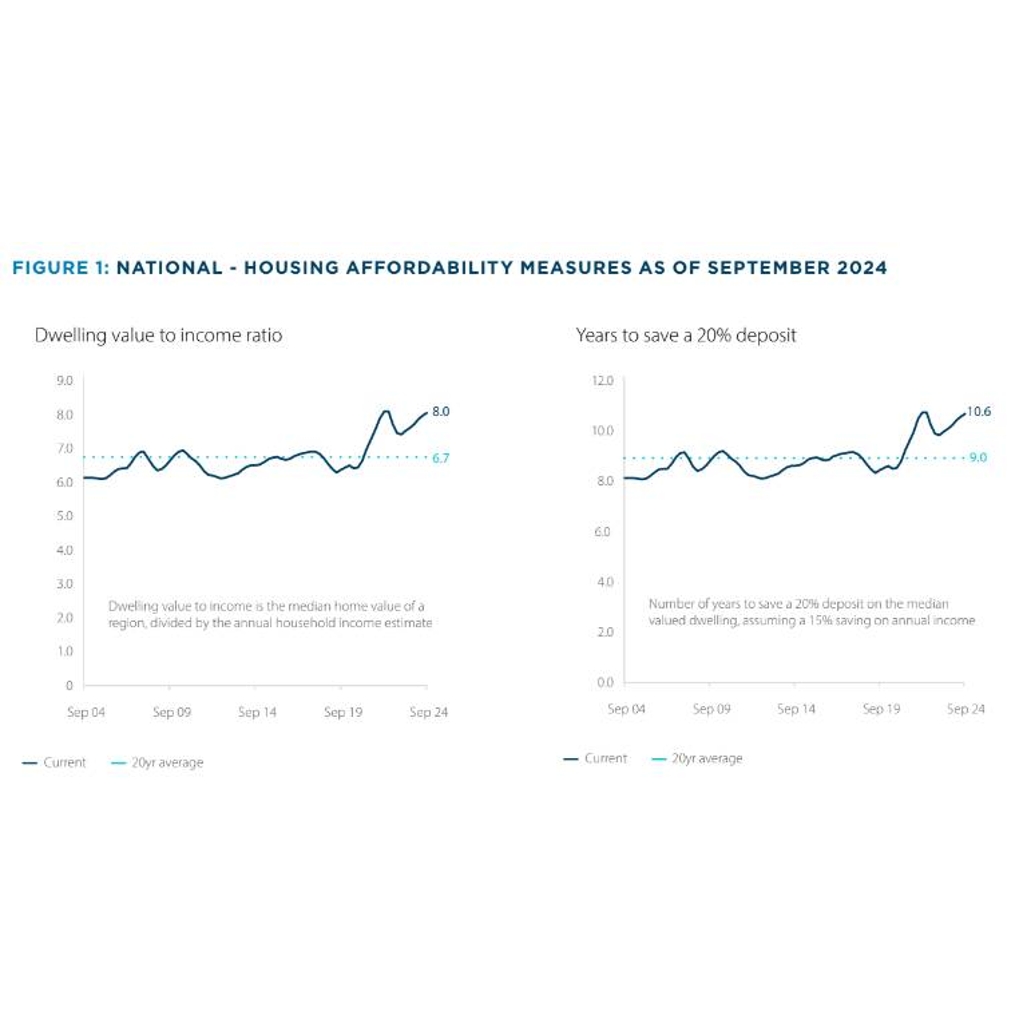
Nationally, the median dwelling value to income ratio is 8.0, up from a 20-year average of 6.7 and equal to the record highs set in early 2022.
"Wages are not keeping up with prices and that is the fundamental problem, especially long term across the housing market," she said.
"If we compare income growth against the housing value growth over the past year from September 2023, we had about 3 per cent income growth versus an almost 9 per cent uplift in house values across the Newcastle and Lake Macquarie region.
"If you don't own a home, it means you're trying to chase a goal that is getting further and further out of reach, and accumulating a 20 per cent deposit becomes harder and harder."
According to the report, it takes new borrowers 12 years to save a 20 per cent deposit on the median dwelling value of $902,000 in Newcastle and Lake Macquarie.
Dwelling values hit record high
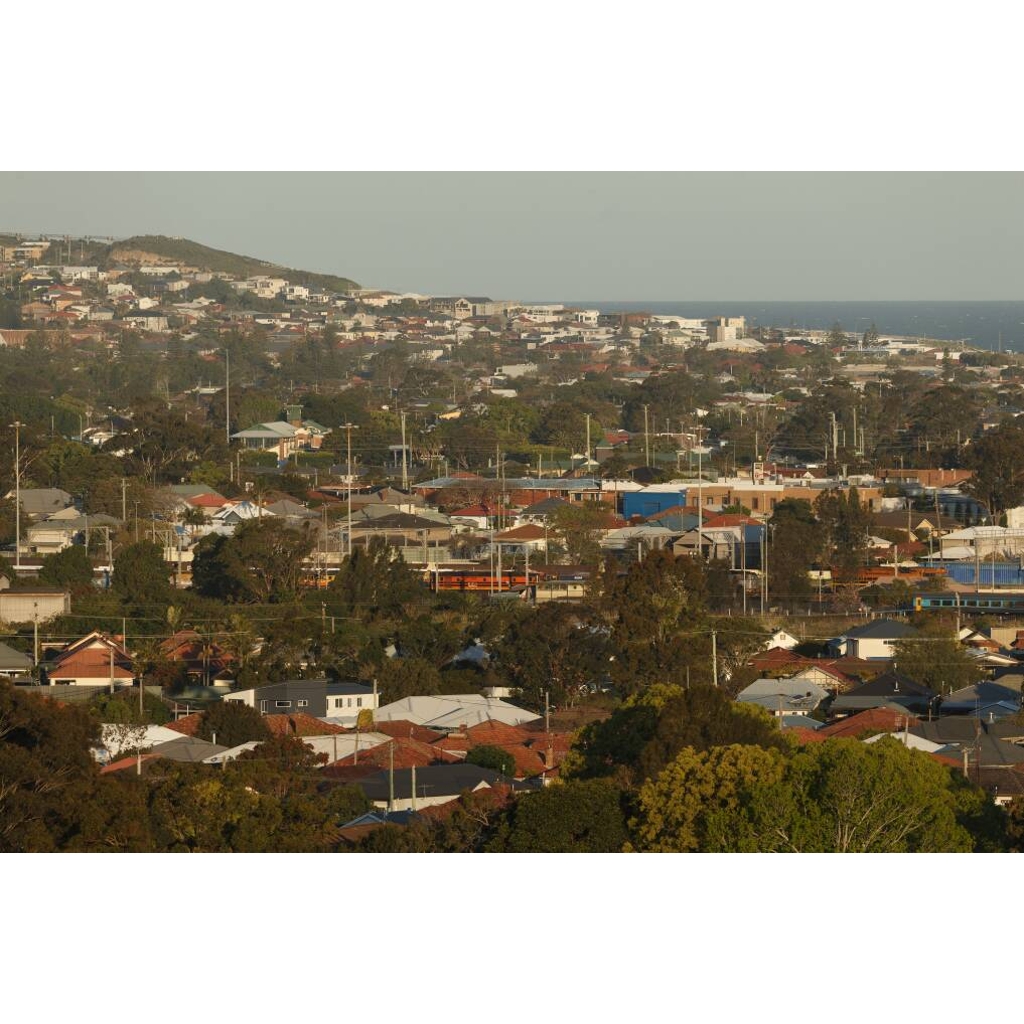
The median dwelling (houses and units) value in Newcastle and Lake Macquarie has risen to a record high of $902,000.
The median house value is $940,000 and units hold a median price of $696,000.
"The market was still in upswing in the three months to October, with dwelling values up another 0.2 per cent," she said.
"Values are actually at their peak for the entire dwelling market as of October, with market values at a record high across the Newcastle and Lake Macquarie region."
Ms Owen said record high dwelling values could be attributed to strengthening demand for units in the region.
"The house market is sitting 0.5 per cent below the record high, so it is really the unit market that has driven that value increase in recent months," she said.
"It is also a trend we have seen across the market more broadly, so in the three months to October, the house market was flat but units values increased 1.2 per cent and this is prospective buyers working within the affordability challenges.
"We are now seeing more of a deflection to the unit market over detached houses."
Rent prices remain high
The median weekly rent value in Australia was $642 per week in September 2024, according to the report.
In Newcastle and Lake Macquarie, renters are forking out 35 per cent of their household income to pay the median weekly rent value of $662.

"Even the rent metric is relatively high," Ms Owen said.
"Nationally, it requires a record 33 per cent of income to service the median rent and in the Newcastle and Lake Macquarie macro region it's up to 35 per cent.
"That is at a record-high as well."
Will housing affordability improve?
According to the report, housing affordability may improve slightly from a mortgage payment perspective in 2025, as the cash rate moves lower.
ANZ Research expects the first cut in February 2025, with 75 basis points of easing in total.
This would take the cash rate to 3.6 per cent, well above the pre-COVID decade average of 2.6 per cent.