Only days after Labor reached a majority Government election result, people are now considering what their proposals mean for the property market. Will it actually make buying property more affordable? Accessible? Attainable? My answer in short is, probably not.

See, rather than going for the property-price-jugular - by proposing changes to CGT, or restricting companies from buying up residential property (which would have been political suicide), instead Labour took an approach to appeal to the broadest voting base possible. A wise political move? Sure. Helpful to those who are feeling locked out of one of the highest price-to-income housing ratios in the world? Sadly not.
Don't get me wrong, there were some promises and proposals that have a sniff of relief... But in case you were thinking this was your silver bullet to your very abode at a reasonable price, I don't think you're in for good news.
Now housing affordability is undoubtably a tricky problem to tackle... How do you make prices more affordable without wobbling or collapsing an estimated $11.3 trillion dollar market?
Many experts have given their thoughts and well-considered graphs. There was, for a time, much talk of a 'mortgage rate cliff' - with fears that the masses would be forced to sell up, as their loans came off fixed-terms and interest rates attacked their pay packets. Maybe this would see house prices come off? Perhaps it would cool the market and stabilise prices? Nope.
Instead of a 'cliff', it has been more of a gradual, gruelling hill we have been forced to ascend - the kind where looking up is never recommended. If the interest rate story has proven anything over the last few years, it's that Aussies are nothing if not stubborn and determined, digging deep and hanging on for dear life to keep their property at almost all costs.
Australian property appears to continue to defy all the odds. The last quarter alone has seen a national increase of 1.1% nationally to April 2025, with regional areas growing faster than capital cities (1.5 per cent compared to 1%).
So, what has Albo proposed and will it help the hopeful looking to get in?
Housing Supply
In any market we must start with the very basics, supply and demand... and the news isn't great. We don't have enough housing stock to meet demand.
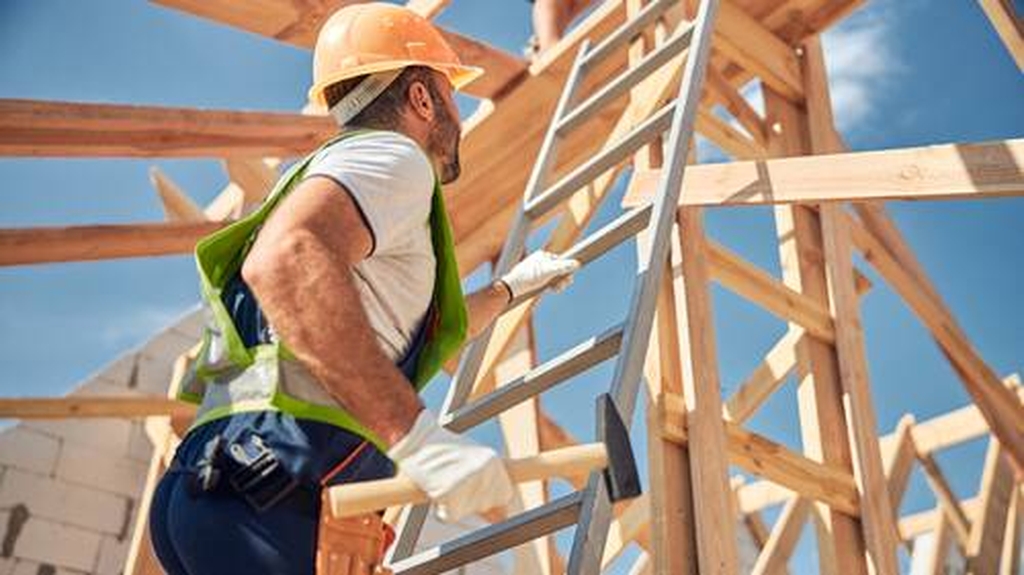
Labor have a goal of building 1.2 million new homes in the next 5 years. It's an ambitious plan and, alas, one that we appear to already be behind on achieving by 2029.
Coupled with upcoming changes to help more older Australians stay supported at home for longer, continued migration and many more sole-occupant households since the onset of COVID - we are likely to see continued pressure on supply for some time yet. And pressure on supply means more people enter the battle arena to fight it out to secure a property, which generally drives prices up.
There have been changes to restrict foreign buyers purchasing existing homes from April 2025 for two years, in an attempt to take some pressure off local buyers. Will it actually help? We will wait and see.
And of course, there is the Housing Australia Future Fund, hascommitted to deliver 40,000 social and affordable housing. Frankly - it's not enough. In fact, the National Housing Supply and Affordibility Council has highlighted that social housing, as a percentage of housing stock, has been declining for the last 3 decades. That's the majority of my life.
Earlier this year Mission Australia stating, 'right now, about 640,000 households are in need of affordable housing but can't access it'. With cost-of-living pressures continuing to strain many everyday Aussies and very affordable private rentals, there is clearly still a huge gap to fill.
The good: Building more homes will go some way in addressing the shortage and supply issue. More training for skilled labour funding to be able to build them. Excluding foreign buyers from purchasing existing homes may reduce competition.
The bad: We are currently behind on the new build target and some experts fear this is well short of what's needed to stabilise prices. We are likely to fall well short of what is needed for affordable and social housing to be readily available to those in need.
First Home Buyers
But surely some of the proposals are good for first home buyers Jess? Well, sort of.
There will be winners and losers here, I think the question to ask in a market that has seen national home values increase by 39 per cent in the last five years is, is it fair that some it's beneficial for some and not others? Should it be a lucky dip, or is that simply the way the real-life lottery works? Some will be ok, others will not.
Take for example the First Home Guarantee Scheme - which will allow first home buyers to buy with a 5 per cent deposit without the need to pay Lenders Mortgage Insurance (LMI). This surely is a good thing, isn't it?
Well, in the 24/25 financial year there were only 35,000 placements available nationally (enter life lottery) and of course, borrowing 95 per cent of the dwelling value means a large mortgage that needs to be paid, and of course the (small but still ever present), risk that the dwelling value may decrease, seeing the purchaser owing more than the underlying value of the property.

I think you could look at this one through both lenses and be right.
Yes, it will get people into property ownership earlier than if they needed to save the full 20 per cent deposit. It could buffer them from any property price increases locking them out of purchasing in the future. On the other hand, it will likely see them in severe 'housing affordability stress' with much more than the suggest percentages of their pay being used to pay the mortgage.
Three is also a proposal to build an extra 100,000 homes specifically for first home buyers and they are looking at ways to build pre-fab homes to reduce construction times. Now, there have been jokes about getting your next house from IKEA, but if you look at the efficiency of some of these pre-fab build times and quality in other areas of the world - I think this is good news.
Then there is the Help to Buy housing scheme, which is providing a financial contribution for first home buyers - up to 30% for an established property and 40 per cent for a new build.
There doesn't appear to be a start date for this yet, however it similarly is restricting numbers, with an estimated 40,000 people like to benefit from this scheme.
The good: can get people into a rising market earlier and see them not pay LMI, or have a lower loan if you are eligible for the Help to Buy Scheme. Income and property price caps have been increased which will see more people eligible to use them.
The bad: the number of placements isn't sufficient and crucially, it doesn't do anything to make housing more affordable for the majority of first-home buyers. If you use the Help to Buy Scheme, you will effectively be co-owning a property with the Government. These schemes don't do anything to make housing more affordable, only marginally accessible and I think understanding the difference between the two is vitally important here.
Now you may think I am being harsh on my critique of the policies here and perhaps that is true. Because I stare across the table from hundreds of hopeful house-hunters who everyday look at me, with sad eyes, asking if buying a home is ever going to be realistic for them. It hurts to dish up reality-checks and break hearts daily. Of course, one budget or round of election promises is never going to be able to fix all of the issues left by successive governments in one foul swoop.
But with Economists still predicting rate reductions this year, it's important to be realistic that house prices are unlikely to be more affordable any time soon - so now it's time to figure out what schemes you might be eligible for, what trade-offs you're prepared to make to get in and how many different ways you can cook rice and beans without getting bored.
Jessica Brady is a qualified Financial Adviser and leading money expert. She is on a mission to educate and empower everyday Australians to be better with money through her online money programs and via the Financially Fierce Podcast. You can learn more at jessicabrady.com.au
This article is general advice only, all of the comments above do not take into account your objectives, financial situation or needs.
Before acting on any information, you should consider the appropriateness of the information provided and the nature of the relevant financial product having regard to your objectives, financial situation and needs. Jessica is licenced through Paragem Pty Ltd - AFSL 297276. ABN 16 108 571 875, Authorised Representative Number 001259972.